
- Your cart is empty Browse Shop
I stopped writing the word “detox”

Twenty-five years in properties where nutrition was part of the promise. And one word I eventually removed from my vocabulary, because I could no longer defend it in front of a client asking me what it rested on.
In short
- No clinical trial has ever demonstrated the efficacy of a commercial detox programme.
- Close to three adults in ten now have metabolic syndrome: that is the real target.
- Four levers hold up: fibre, protein (and strength), a Mediterranean pattern, fermented foods.
- Three things I no longer offer: intermittent fasting as a clock mechanism, the Blue Zones, consumer microbiome tests.
- What changes in an assignment is not the cost. It is the vocabulary — and what you become able to stand behind.
There is one question I dread in a management meeting, and it is always the same: « what does this promise rest on? »
It is legitimate. It is even healthy. And for a long time, on the nutrition side, I had no solid answer. The word « detox » appeared on the menus of most of the properties I worked with. It sold well. It designated nothing precise.
The reference critical review on the subject is unambiguous: no clinical trial has ever demonstrated the efficacy of a commercial detox programme. The finding dates from 2015. The word is still here.
What changed my mind was not the science. It was the guest.
The clientele paying the most is now informed. They read, they measure, they sometimes wear a sensor on the wrist. They tell the difference between a narrative and a datapoint. And they sanction the gap — not by complaining, but by not coming back.
And what they are looking for does exist. Close to three adults in ten worldwide now present with metabolic syndrome; twenty-five years ago it was roughly one in ten. That is the real target. It is less poetic than a spring cure. It is infinitely more defensible.
What I offer now comes down to four things
Fibre. Twenty-five to thirty grams a day, associated in a major Lancet synthesis with a reduction in mortality of the order of 15 to 30%. It is the most solid result in all of contemporary nutrition, and the one nobody talks about — because it does not stage well. In France we eat twenty, against a recommendation of thirty.
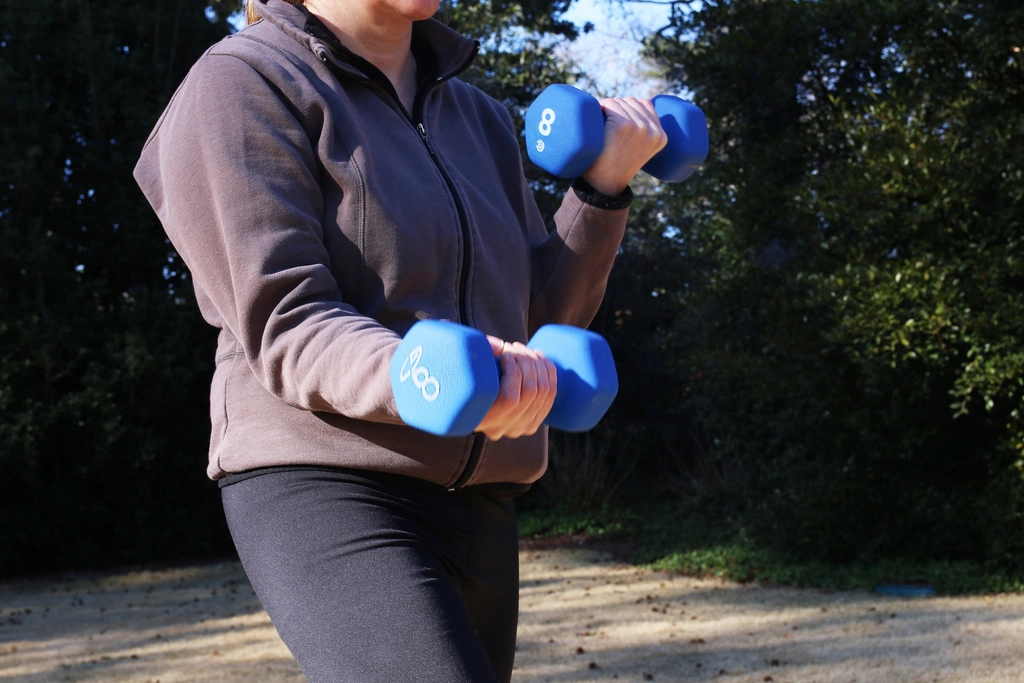
Protein, with one precision I repeat on every assignment: what counts is not the figure on the scale, it is strength. It declines two to five times faster than muscle mass, and it is what decides autonomy at seventy-five.
A Mediterranean pattern, which twenty-five years of follow-up on twenty-five thousand women shows genuinely adds years of life.
And fermented foods — yoghurt, kefir, lacto-fermented vegetables — which, in a Stanford trial, lowered nineteen inflammatory markers in ten weeks.
Four levers. They fit in a kitchen. None of them requires a machine.

What I no longer offer
I no longer sell intermittent fasting as a clock mechanism: a one-year trial in the New England Journal of Medicine shows that the restricted window does no better than plain moderation. Fasting remains a useful framework for some people; it is not a key to longevity.
I no longer lean on the Blue Zones. Award-winning 2024 work by a demographer at University College London showed that these longevity records rest largely on incomplete civil registration. The meals they inspired remain excellent; the argument no longer holds.
And I do not have consumer microbiome tests installed. An evaluation of seven services returned, on a single split sample, two opposite verdicts.
What this changes in an assignment
Almost everything, and almost nothing. The menu does not cost more. The teams do not ask for more hours. What changes is the vocabulary — and what you become able to stand behind.
When I design a guest journey today, I no longer ask a director which programme he wants to offer. I ask him how he wants his guests to feel as they leave. Energy, sleep, vitality: those are answers that can be worked on, and verified.
Nutrition is where our profession has accumulated the most credibility debt. It is also, for that very reason, where it has the most to regain.
Read next: the rise of longevity hospitality and designing a high-performance wellness concept.
Rethinking your nutrition offer? Let’s talk. Contact me — or browse the Journal.
Further reading
- Dietary fibre and mortality — meta-analysis, The Lancet, 2019
- Detox diets: a critical review of the evidence — Journal of Human Nutrition and Dietetics, 2015
- Mediterranean diet and mortality — 25-year follow-up, JAMA Network Open, 2024
- Fermented foods and inflammation — Stanford trial, Cell, 2021
- Time-restricted eating — one-year trial, New England Journal of Medicine, 2022
- Blue Zones and the reliability of civil registration — S. J. Newman, 2024
Popular Posts




(02) Comment
Recovery Circuits: Cold Plunge and Strength Training | Sophie Agullana
September 24, 2026 - 12:50 PM[…] next: I stopped writing the word “detox” and the rise of longevity […]
What I Stopped Promising After a Treatment | Sophie Agullana
September 24, 2026 - 3:35 PM[…] Read next: the recovery circuit I dismantle and I stopped writing the word “detox”. […]