
- Your cart is empty Browse Shop
The recovery circuit I dismantle on almost every assignment
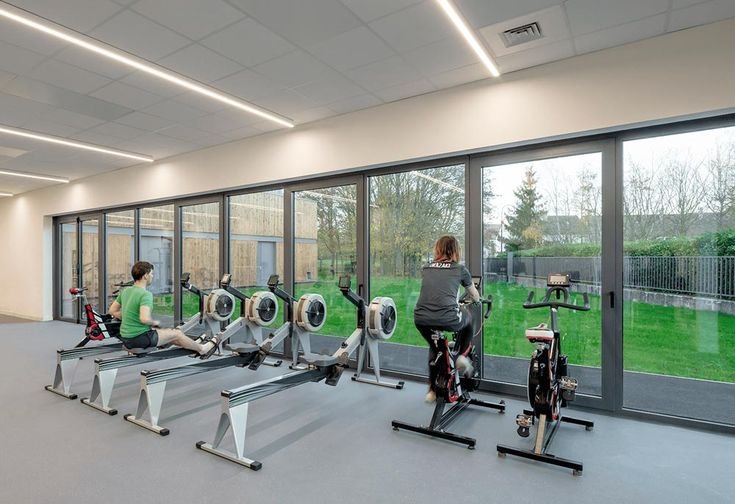
There is one sequence I find in almost every property I work with. It is beautiful, it is well drawn, it photographs wonderfully. And it works against the guest.
In short
- Strength training then a cold plunge straight after: cold blunts the muscle gains the session has just triggered.
- The fix costs nothing: a few hours apart, or cold reserved for cardio days.
- The most sedentary guest has the most to gain: more than half the benefit happens at the first step up.
- Grip strength predicts mortality better than blood pressure. A dynamometer costs a few hundred euros.
- Thirty to sixty minutes of strength work per week is enough: two sessions.
Gym, then cold plunge. In that order, back to back. It is the standard recovery circuit, imagined by talented architects and printed on just about every brochure in the profession.
In 2024, a meta-analysis pooling eight trials showed that cold-water immersion practised straight after a resistance session blunts muscle gains. The mechanism is known: cold dulls exactly the signal the effort has just triggered.
The guest does the work. And the circuit erases part of it.
That is no reason to close the plunge pool
Cold keeps a real place. It helps between two closely spaced efforts, it relieves soreness, and it offers a sensory experience nothing replaces — which, in hospitality, is a product in its own right. What I change is the sequence, never the equipment. A few hours apart, or cold reserved for cardio days. It costs nothing. It is scheduling and training.
But the example says something broader about our profession: we build a great many experiences before verifying what they produce.

What I look at first in an audit
Three things, and they are not the ones people expect.
Breath
A Cleveland Clinic study of more than a hundred and twenty thousand patients shows that the fittest die about five times less often than the least fit — more than smoking or diabetes weigh in the same cohort. And above all: more than half the benefit happens between the most sedentary group and the one just above it. The guest with the most to gain in your property is the one who never walks into the gym. I repeat it to every management team, because it is a commercial argument as much as a fact.
Strength
In a study across seventeen countries on a hundred and forty thousand people, grip strength predicts mortality risk better than blood pressure. A dynamometer costs a few hundred euros. It says more than the bioimpedance scale installed at the entrance of nearly every spa — on which entire assessments are nonetheless built.
Recovery, measured honestly
Many houses now anchor their narrative to the recovery scores of connected watches. Compared with an electrocardiogram, these optical sensors are off by about 17%, against 2% for a chest strap. These devices are excellent for opening the conversation and following a trend. They are not an assessment, and I advise against selling them as one.
The good news is the dose
Pooling sixteen large studies, the British Journal of Sports Medicine places the maximum benefit of resistance training between thirty and sixty minutes a week. A week. Beyond two hours, it fades.
Two sessions. That fits into a three-night stay, it fits into an executive’s week, and it requires no equipment you do not already have.
That is why, on assignment, I resist the temptation of more equipment. The question is almost never « what should we buy ». It is: in what order, supervised by whom, and for what stated outcome.
Read next: I stopped writing the word “detox” and the rise of longevity hospitality.
Want to know what your circuit actually produces? That is exactly what I look at. Contact me — or browse the Journal.
Further reading
- Fitness and longevity — Cleveland Clinic, 120,000 patients, JAMA Network Open, 2018
- Grip strength as a health marker — PURE study, 17 countries, The Lancet, 2015
- Resistance training dose — synthesis of 16 studies, British Journal of Sports Medicine, 2022
- Cold-water immersion and muscle gains — meta-analysis, European Journal of Sport Science, 2024
Popular Posts


(02) Comment
What I Stopped Promising After a Treatment | Sophie Agullana
September 24, 2026 - 12:51 PM[…] next: the recovery circuit I dismantle and I stopped writing the word […]
Perimenopause: What a House Can Honestly Offer | Sophie Agullana
September 24, 2026 - 12:54 PM[…] next: the recovery circuit I dismantle and what I stopped promising after a […]